- All
- Product Name
- Product Keyword
- Product Model
- Product Summary
- Product Description
- Multi Field Search
Email: sales@xelitepower.com
 English English
Author: Site Editor Publish Time: 01-23-2026 Origin: Site


Do you face challenges in power systems with fluctuating voltage? DC-DC converters are key to ensuring stable, efficient power in such environments. This article will explore how wide input range DC-DC converters tackle these issues.
You will learn about the benefits, applications, and features of Xelite’s converters, which are designed for diverse industries like automotive, industrial automation, and renewable energy.
A DC-DC converter is a type of electronic device designed to change the voltage from one level to another. It works by taking an input voltage, either higher or lower than the desired output, and converting it into a stable output voltage to power electronic devices. The primary function of these converters is to ensure consistent and reliable power delivery, especially in systems where the input voltage may vary, such as renewable energy systems, industrial machinery, and automotive applications.
The stability of the voltage output is vital for maintaining the operational efficiency of sensitive devices like microcontrollers, sensors, and industrial equipment. A fluctuating power source can cause performance issues, so DC-DC converters regulate the voltage to prevent damage and ensure optimal function.
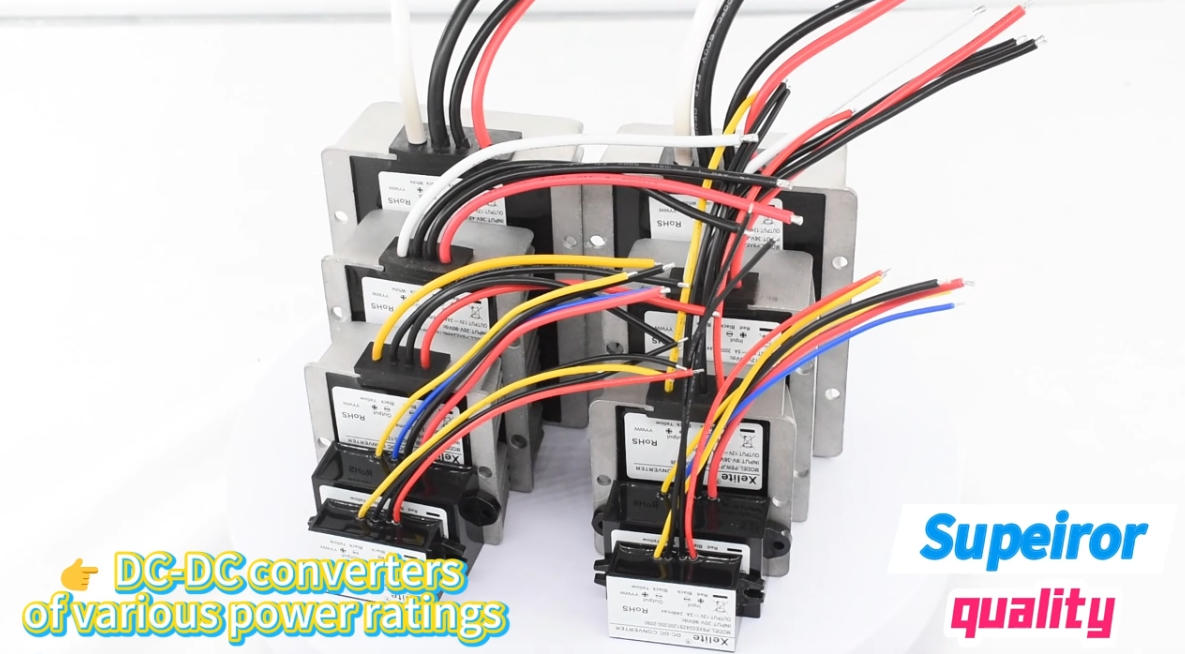
There are several types of DC-DC converters, each serving a unique purpose depending on the voltage requirements of the system. These include:
● Buck Converters (Step-Down): These converters lower the input voltage to a more appropriate level for the load. They are ideal when you need to convert a higher voltage to a lower, stable voltage.
● Boost Converters (Step-Up): Boost converters increase the input voltage to a higher level. They are useful when the input voltage is lower than the required output voltage.
● Buck-Boost Converters (Combination): These versatile converters can either increase or decrease the input voltage, making them highly adaptable to fluctuating voltage environments.
Converter Type | Voltage Conversion | Efficiency | Common Applications |
Buck Converter | Step-down | 85–90% | Powering sensors, LED lighting systems |
Boost Converter | Step-up | 90–95% | Battery charging, automotive electronics |
Buck-Boost Converter | Both step-up and step-down | 90–95% | Solar systems, electric vehicles, IoT devices |
A wide input range DC-DC converter offers several advantages over traditional converters with narrower input ranges. It can accept a much broader range of input voltages, making it more adaptable to different power sources. Here are some of the key benefits:
● Design Flexibility: One converter can handle multiple voltage levels, reducing the need for different models across various devices. This minimizes the complexity of the design, simplifies procurement, and reduces inventory costs.
● Tolerance to Voltage Fluctuations: These converters are designed to tolerate voltage surges and dips, which are common in fluctuating environments. This capability ensures that the equipment receives a stable output, even during events such as voltage spikes or drops.
By using a single wide input range DC-DC converter to manage voltage fluctuations, companies can simplify their designs and reduce the need for multiple power modules. This results in a streamlined system architecture and cost savings on both manufacturing and inventory management. Furthermore, Xelite’s customizable solutions allow for the flexibility to adjust input and output voltage, ensuring compatibility with a variety of applications without the need for multiple units.
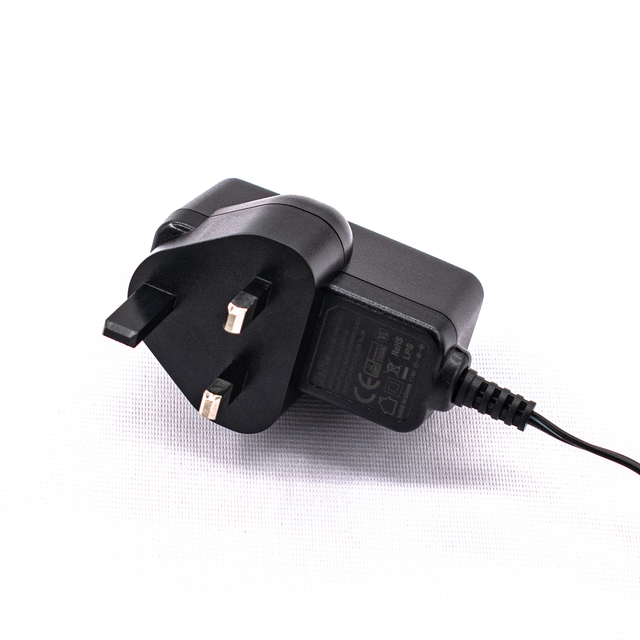
Xelite’s wide input range DC-DC converters come equipped with advanced protection features to safeguard sensitive electronic equipment. These include:
● Over-Voltage Protection (OVP): Prevents excessive voltage from damaging connected devices.
● Over-Current Protection (OCP): Protects the converter and the system by limiting the current flow when an overcurrent situation is detected.
● Short-Circuit Protection: Immediately disconnects power when a short circuit occurs, preventing potential damage.
● Over-Temperature Protection (OTP): Monitors the temperature of the converter, shutting down if it overheats to avoid failure.
Wide input range DC-DC converters play a crucial role in stabilizing power within industrial systems where voltage fluctuations are common. These converters help ensure that critical equipment like sensors, controllers, and communication infrastructure maintain reliable performance despite unstable input voltage. For example, in manufacturing plants, DC-DC converters regulate power to embedded control systems that handle machinery and automation processes, preventing power disruptions that could lead to costly downtime.
Key Benefits for Industrial Applications:
● Stable Power Supply: Ensures uninterrupted operation of sensors and control systems.
● Voltage Fluctuation Tolerance: Adaptable to the varied input voltages seen in industrial environments.
● Improved Efficiency: Enhances the overall efficiency of automation systems, reducing operational costs.
Application | Voltage Range | Key Component Supported |
Industrial Control Systems | 24V, 48V | PLCs, Sensors |
Telecommunication Equipment | 48V | Communication Modules |
In renewable energy systems like solar power setups, the input voltage can vary drastically due to changes in environmental factors such as sunlight intensity and temperature. A wide input range DC-DC converter ensures that the system can operate efficiently despite these fluctuations. Whether it’s converting the variable output from solar panels into stable power or managing the fluctuations in battery-driven systems, these converters help maintain a consistent output, maximizing energy usage and minimizing system failures.
Role of DC-DC Converters in Solar Systems:
● Voltage Stability: Ensures a regulated output from solar panels regardless of varying sunlight conditions.
● Energy Efficiency: Converts power efficiently to meet the specific needs of connected devices, whether for storage or direct use.
● Adaptability: Capable of handling input voltage from a wide range of sources, including solar arrays, wind turbines, or battery banks.
System Type | Input Voltage Variability | Converter Role |
Solar Power | 10V – 60V (varies by weather) | Conversion and regulation |
Wind Energy | 12V – 48V | Energy stabilization |
Battery Storage | 3V – 24V | Charging and voltage regulation |
Electric vehicles, including AGVs (Automated Guided Vehicles), forklifts, and golf carts, typically operate with batteries that are prone to significant voltage fluctuations depending on the state of charge, load conditions, and driving patterns. Wide input range DC-DC converters provide the flexibility required to manage these fluctuations. For instance, in electric vehicles with 48V or 96V battery systems, the converter adjusts to a wide input voltage range and delivers stable power to critical subsystems like motors, controllers, and communication units.
Benefits for EV Applications:
● Stable Power Supply: Ensures uninterrupted operation of vehicle electronics even during load changes.
● Adaptability to Battery Voltage: Adjusts efficiently to varying voltage levels from battery discharge or regeneration.
● Power Optimization: Helps in maximizing battery life by providing power at the most efficient voltage levels.
Vehicle Type | Battery Voltage Range | Key Components Powered |
AGVs | 48V – 96V | Motors, Sensors |
Forklifts | 48V – 96V | Controllers, Lighting |
Golf Carts | 36V – 48V | Navigation Systems, Lighting |
Railway systems and automotive electronics are often exposed to sudden voltage spikes, particularly during startup or due to regenerative braking in trains and vehicles. A wide input range DC-DC converter can handle these fluctuations, maintaining stable power output despite the large variations in voltage. For example, in railway applications, converters with a broad input range (e.g., 14V to 154V) can stabilize power across different train systems, helping maintain consistent operation in demanding environments.
Application Benefits in Transportation:
● Surge Tolerance: Can handle spikes from regenerative braking or sudden power demands during startup.
● Reliability: Provides stable and reliable power to critical components, ensuring safety and operational continuity.
● Compatibility: Works across a variety of voltage systems used in automotive and rail systems.
Application Type | Voltage Range | Conversion Requirement |
Railway Systems | 14V – 154V | Power stabilization |
Electric Vehicles | 12V – 110V | Motor and system power |
Automotive Systems | 12V – 48V | Controller and sensor power |
A DC-DC converter works by converting an input DC voltage into a different DC voltage. This process occurs through three main stages: rectification, switching, and regulation.
● Rectification: This first step involves converting the incoming AC power into DC. However, most modern systems use DC already, so the rectifier stage may not always be required in DC-DC applications. The main task is to manage variations in the input DC voltage.
● Switching: The switching stage uses high-speed transistors to rapidly switch the DC voltage on and off. This process modulates the voltage, allowing for voltage transformation.
● Regulation: The regulation stage ensures that the output voltage remains stable, regardless of fluctuations in the input. Advanced regulation circuits are employed to handle significant voltage variations and prevent issues like over-voltage or under-voltage conditions.
Xelite’s DC-DC converters use high-frequency switching technology (50kHz to 1MHz), which helps reduce the size of the components and improves the overall efficiency of the converter. This approach allows for compact designs and faster processing of voltage conversion.
Efficiency is a critical factor in DC-DC converters, especially in environments with fluctuating voltages. Modern wide input range DC-DC converters achieve efficiencies of up to 96% by employing advanced circuit designs, minimizing energy loss, and reducing heat generation.
High efficiency means less energy is lost as heat, allowing the converter to operate cooler and more reliably. This is particularly important in environments where power sources fluctuate, such as renewable energy systems or electric vehicles. By maximizing efficiency, systems can maintain stable performance without wasting energy.
Xelite’s DC-DC converters are designed for high efficiency, typically achieving 90–95% efficiency. This results in lower operational costs and reduced cooling requirements, which is a significant benefit in both industrial and automotive applications. The converters also feature minimal ripple and noise, further improving their reliability.
Feature | Standard DC-DC Converter | Wide Input Range Converter (Xelite) |
Efficiency | 85–90% | 90–95% |
Ripple & Noise | High | Low |
Cooling Requirement | High | Low |
Xelite’s wide input range DC-DC converters utilize advanced synchronous rectification to optimize power efficiency across a broad input voltage range. This allows for improved performance and stability, even when input voltages fluctuate.
By maintaining high efficiency, Xelite ensures that power systems using their converters consume less energy, have a smaller environmental footprint, and operate more sustainably. This design approach is especially beneficial for industries where energy efficiency and cost savings are critical.
Xelite’s DC-DC converters are engineered to provide reliable power solutions in environments where input voltages fluctuate. These converters support a broad range of input voltages and are ideal for a variety of industries such as industrial automation, renewable energy, and automotive electronics. Key models include:
● 3-90V to 5-24V 1-10A
● 15-90V to 3.3-12.3V 1.5-4A
These converters offer flexibility in output voltage options, including 5V, 12V, and 24V, and are customizable to meet specific application requirements.
About Xelite: Established in 2008, Xelite is a trusted power supply manufacturer based in Huizhou, Guangdong, China. With a strong reputation across various sectors, including healthcare, IoT, and industrial applications, Xelite specializes in providing high-quality power solutions designed for real-world environments:contentReference[oaicite:0]{index=0}.
Xelite’s DC-DC converters are built with a focus on durability, performance, and adaptability, ensuring that systems requiring precise and stable power can run without interruption.
Xelite's DC-DC converters are designed to handle a wide range of applications, from industrial automation to renewable energy systems. Some of the key features of Xelite’s DC-DC converters include:
● Wide Input Voltage Range: Depending on the model, input voltage ranges from 8–90V to 15–90V, ensuring compatibility with various power sources.
● High Efficiency: With efficiency levels reaching 90–95%, these converters minimize energy loss and reduce heat generation, making them ideal for systems that require long-term, reliable operation.
● Protection Features: Each converter is equipped with essential protection features, including over-current, over-voltage, short-circuit, and over-temperature safeguards.
● Compact and Durable Design: Built to withstand harsh conditions, many of Xelite’s converters come with an IP67 waterproof rating, ensuring durability and reliability in demanding environments.
Xelite’s DC-DC converters are highly adaptable to various industries. Below are some common applications and how Xelite tailors solutions to meet industry-specific needs:
● Industrial Automation: Converters ensure stable power for control systems, sensors, and monitoring equipment. These applications benefit from the flexibility of wide input ranges and high efficiency.
● Renewable Energy: Xelite’s converters are crucial in solar, wind, and battery-driven systems, where they stabilize fluctuating input voltages to maintain consistent energy delivery.
● Automotive and EV Applications: Used in electric vehicles and other automotive systems, Xelite’s DC-DC converters manage the varying power demands of electric motors, sensors, and controllers.
● Customization Services: Xelite offers OEM/ODM services to adapt its converters for specific voltage, current, and power requirements. This customization ensures optimal performance across different applications.
Industry | Key Applications | Xelite’s Solutions |
Industrial Automation | Control systems, sensors, IoT devices | Wide input range for varying power sources, efficient operation |
Renewable Energy | Solar, wind, and battery systems | Stability in fluctuating energy conditions, high efficiency |
Automotive/EV | Electric vehicles, battery chargers, motors | Voltage regulation for consistent power supply |
OEM/ODM Custom Solutions | Custom voltage, power requirements | Tailored solutions to fit specific industry needs |
In this article, we’ve explored Xelite’s DC-DC converters, designed for environments with fluctuating voltage. With a focus on high efficiency and wide input range, Xelite’s converters provide adaptable solutions for industrial, automotive, and renewable energy applications. The company’s OEM/ODM services ensure customization for specific voltage and current needs, offering valuable solutions across various industries.
A: A DC-DC converter with a wide input range can accept varying input voltages and output a stable, regulated voltage. This is ideal for environments with fluctuating power sources.
A: These converters ensure stable power to industrial control systems and sensors, even when the input voltage fluctuates due to varying power sources.
A: Wide input range DC-DC converters are used in industries like automotive, industrial automation, renewable energy, and communication equipment.
A: Yes, it can adapt to multiple voltage sources, making it highly flexible for applications where power sources are inconsistent.
A: Xelite’s converters provide high efficiency (up to 95%) and reliability, with protection features like over-current and over-temperature, making them ideal for demanding applications.