- All
- Product Name
- Product Keyword
- Product Model
- Product Summary
- Product Description
- Multi Field Search
Email: sales@xelitepower.com
 English English
Author: Site Editor Publish Time: 01-27-2026 Origin: Site


Are you facing space constraints in your DC-DC converter design? With the demand for more compact electronics, efficient power conversion in limited spaces is crucial.
In this article, we’ll explore strategies to maximize power density in PCB layouts. You’ll discover how to optimize component placement, manage thermal performance, and minimize power loss, ensuring high efficiency in space-constrained designs.
PCB layout in DC-DC converters is the process of arranging the components on a printed circuit board to ensure efficient power conversion. The design of the PCB is crucial as it influences multiple performance factors such as electrical, mechanical, thermal, and electromagnetic behaviors. The goal is to minimize energy loss, reduce interference, and maximize the converter’s efficiency, all while maintaining a compact form factor.
In a DC-DC converter, key components such as MOSFETs, inductors, and capacitors must be strategically placed to ensure optimal performance. Poor layout decisions can lead to significant inefficiencies, such as increased heat generation, noise interference, and poor power regulation.
The layout plays a vital role in achieving the desired conversion efficiency, which is why a well-thought-out design is essential. By understanding how electrical signals flow through the converter and how components interact, engineers can create more effective and reliable power supplies.
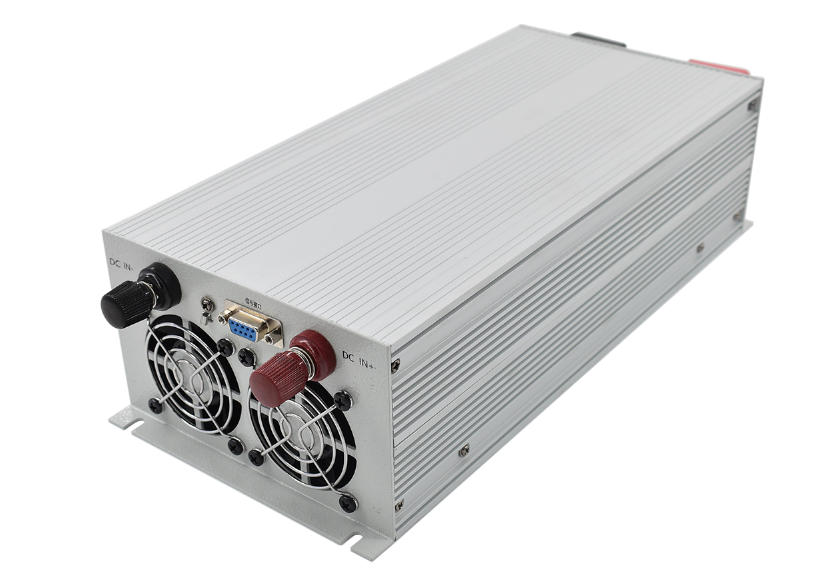
The efficiency of a DC-DC converter depends largely on how the components are positioned on the PCB. Efficient layout strategies can significantly reduce power losses and improve the overall performance of the converter. Here’s a look at how certain aspects of PCB layout influence efficiency:
● Strategic Component Placement: Proper positioning of components like MOSFETs, capacitors, and inductors is key to minimizing power losses. For example, MOSFETs should be placed close to the input and output paths to reduce the length of power loops, minimizing voltage drops and losses.
● Thermal Management: By carefully planning the layout, components that generate heat can be placed in areas with better airflow or near heatsinks to avoid overheating. Effective thermal management helps maintain the converter’s performance and longevity.
● Parasitic Components: Parasitic inductance and resistance from traces, vias, and other components can degrade the performance of the converter. By minimizing loop areas and using wider copper traces, engineers can reduce these parasitics, leading to improved efficiency and stability.
A well-optimized layout ensures that DC-DC converters maintain high efficiency, lower heat generation, and stable voltage output, which are essential for compact designs in space-constrained applications like automotive and industrial systems.
Factor | Impact on Efficiency | Example |
Component Placement | Reduces power loss, improves current paths | Close placement of MOSFETs and capacitors |
Thermal Management | Prevents overheating, ensures stable operation | Positioning components near heatsinks or airflow |
Parasitic Components | Minimizes losses due to parasitic resistance and inductance | Shortening loop areas, using wide copper traces |
The layout of a DC-DC converter impacts power loss in various ways. By reducing the resistive losses in the current paths and optimizing the switching behavior of components, designers can ensure higher conversion efficiency. Proper layout reduces the voltage drop across the converter, improving the overall performance and enabling the device to run cooler and more reliably.
For example, using ceramic capacitors close to MOSFETs helps to stabilize the switching process by providing instantaneous power, reducing the voltage ripple. Additionally, the careful arrangement of inductors can reduce energy storage losses, contributing to higher efficiency.
Efficient component placement is crucial in maximizing power density for DC-DC converters. By strategically positioning key components like MOSFETs, capacitors, and inductors, designers can minimize power loss and improve overall conversion efficiency. When components are placed too far apart, parasitic inductance increases, which can result in significant energy loss and reduced converter performance.
To achieve high efficiency, the following points must be considered:
● Minimize Loop Areas: The shorter the current loops, the lower the resistance and inductance, leading to reduced losses. Keeping high-current paths as short as possible is crucial for achieving optimal performance.
● Parasitic Inductance Reduction: Parasitic inductance can interfere with the switching performance of the converter. By placing components with high switching speeds close together, parasitic inductance is minimized, improving efficiency and reducing heat generation.
● Component Proximity: Keeping input capacitors near the input terminals and output capacitors close to the load path ensures efficient power transfer with minimal losses.
Efficient placement not only improves power density but also enhances thermal performance, ensuring the converter runs cooler and more reliably, especially in space-constrained applications like automotive systems and industrial control.
In space-constrained designs, using both the top and bottom sides of the PCB allows for better component distribution and maximizes available space. This technique is especially beneficial when dealing with high-power density DC-DC converters that need to pack a lot of components into a small area.
By utilizing both sides of the PCB, designers can:
● Maximize Space Efficiency: By placing components that generate heat, such as inductors and bulk capacitors, on the bottom side, the top side can remain dedicated to the more sensitive, high-speed components like MOSFETs and capacitors.
● Maintain Performance: Even with limited space, this dual-side placement ensures that performance is not compromised. Components on both sides can work together to achieve high power density without sacrificing thermal efficiency or electrical performance.
● Reduce Interference: By carefully organizing components on both sides, interference between power and signal lines is minimized, improving overall reliability and efficiency.
This layout strategy is particularly useful in automotive electronics, where space is often limited but high performance is still required, as well as in industrial control systems that demand reliability in tight spaces.
When designing a DC-DC converter for high power density, selecting the right PCB stack-up is crucial. The stack-up configuration directly influences power distribution, noise reduction, and signal integrity, all of which are critical in space-constrained applications.
Key considerations for selecting the right stack-up include:
● Multi-layer Boards: Using a multi-layer PCB enables better power distribution and ensures that the ground and signal layers are separated from the power planes, reducing noise and improving overall performance. Xelite uses multi-layer designs for their high-efficiency converters, ensuring stable operation even in complex environments.
● Ground Planes: A continuous ground plane is essential for reducing electromagnetic interference (EMI) and ensuring stable voltage levels throughout the converter. Ground planes act as shields that prevent noise from spreading between components and lines.
● Signal Integrity: The proximity of the signal traces to the ground plane ensures minimal interference. Proper spacing between signal and power planes is essential to maintain signal integrity, especially in high-frequency applications.
Factor | Impact on Performance | Example from Xelite's Design |
Component Placement | Shortening power loops, reducing parasitic inductance | MOSFETs placed near input/output for efficiency |
PCB Stack-Up | Multi-layer design for better power distribution and reduced noise | Xelite’s multi-layer PCB for optimized thermal management |
Ground Plane | Reduces EMI, ensures voltage stability | Continuous ground plane used in Xelite converters for EMI control |
In compact DC-DC converter designs, heat dissipation becomes a critical challenge. As power density increases in a smaller footprint, more energy is concentrated within a confined space, leading to higher temperatures. Without effective thermal management, overheating can occur, resulting in reduced converter performance, potential failure, and shorter operational lifespan.
Effective thermal management ensures that the converter components stay within their optimal temperature range, avoiding excessive heat that can damage sensitive components like MOSFETs and capacitors. This is especially crucial in space-constrained designs, where limited physical space restricts traditional cooling methods like fans and large heat sinks.
In these compact designs, cooling becomes a balancing act, where engineers must use innovative methods to manage heat without increasing the overall size of the converter.
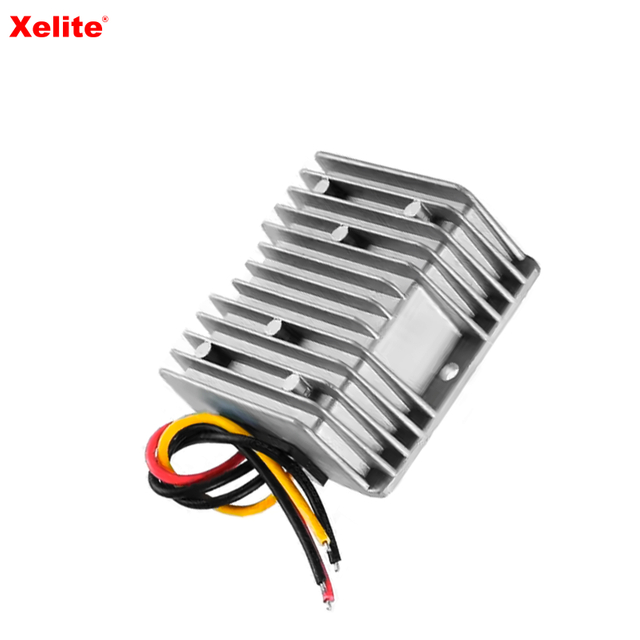
Thermal management techniques play a vital role in improving the reliability and performance of DC-DC converters in tight layouts. Here are some techniques that can significantly enhance heat dissipation:
● Thermal Vias: Incorporating thermal vias into the PCB design helps transfer heat from the components to other layers of the board, aiding in more efficient heat spreading across the PCB. These vias provide a pathway for heat to dissipate away from critical components, preventing localized overheating.
● Copper Planes: Copper planes provide a large area for heat to dissipate, acting as a heat sink. These planes help reduce thermal impedance, allowing heat to spread more effectively across the PCB and prevent heat buildup at component sites like MOSFETs.
● Heatsinks: When space allows, using heatsinks in conjunction with thermal vias and copper planes can enhance heat dissipation, especially for high-power DC-DC converters. Heatsinks are particularly effective when placed near heat-generating components, such as MOSFETs or inductors.
For instance, Xelite’s DC-DC converters, like the 3-90V to 5-24V 1-10A converter, utilize these thermal management techniques to ensure efficient power conversion while maintaining thermal stability in automotive systems and industrial equipment.
Parasitic inductance occurs when traces or components unintentionally act as inductors, affecting the switching performance of a DC-DC converter. This can lead to inefficiencies and increased electromagnetic interference (EMI). In a compact design, minimizing parasitic inductance is critical to improving converter performance and reducing EMI.
To minimize parasitic inductance:
● Shorten Current Paths: Keeping power traces as short and wide as possible reduces the loop inductance. This is important in high-speed switching converters, where long current paths lead to higher parasitic inductance and inefficiencies.
● Use of Thick Copper Layers: Using thick copper layers in the PCB design helps reduce resistance and parasitic inductance, improving power delivery efficiency.
By addressing parasitic inductance in the design phase, engineers can improve the DC-DC converter’s efficiency, especially when space is at a premium, as in automotive electronics and industrial control systems.
Minimizing EMI in compact DC-DC converters is essential for reliable operation, especially in sensitive applications like communication devices and automotive systems. The following PCB layout techniques are crucial for achieving low EMI:
● Shield Planes: Incorporating shield planes around power components helps contain and redirect EMI, preventing it from radiating out of the PCB and interfering with nearby sensitive circuits. Shield planes are particularly effective when placed near high-frequency components like MOSFETs and capacitors.
● Short Power Loops: Ensuring that current paths are short and direct reduces EMI and improves the converter’s switching performance. Longer power loops act like antennas, radiating noise that can disrupt nearby electronics.
● Controlled Current Paths: Routing high-current paths away from signal traces minimizes the likelihood of noise coupling into sensitive components. Keeping signal and power traces separate improves the overall EMI performance of the converter.
In Xelite’s DC-DC converters, such as the 15-90V to 3.3-12.3V 1.5-4A converter, these techniques are employed to ensure low ripple and noise, making them ideal for use in automotive electronics and industrial control systems where stable performance is essential.
Technique | Impact on EMI | Example Application |
Shield Planes | Contain EMI and prevent interference | Xelite's DC-DC converters for automotive systems |
Short Power Loops | Reduce radiated EMI by minimizing current loop length | MOSFETs and inductors placed close together |
Controlled Current Paths | Minimize noise coupling and signal degradation | Signal traces kept far from high-current paths |
Xelite is a prominent manufacturer of DC-DC converters, offering high-quality power solutions across a variety of industries. Founded in 2008, the company specializes in delivering customizable OEM and ODM solutions tailored to meet specific voltage, current, and interface requirements for diverse applications.
With a focus on industries such as automotive, industrial, telecommunications, and LED lighting, Xelite has built a reputation for producing reliable and efficient power supplies. Their DC-DC converters are designed to provide stable, regulated power in compact and space-constrained designs. This makes them ideal for modern applications where both performance and size matter.
Xelite’s deep expertise allows them to create tailored solutions, adapting each converter to the unique needs of the customer. Whether it’s for vehicle power supplies in automotive systems, automation equipment in industrial settings, or LED lighting systems for energy-efficient solutions, Xelite meets the diverse needs of their clients with precision.
Xelite places a high priority on quality control throughout the manufacturing process. They are certified with ISO 9001 and ISO 14001, which ensures that all products meet stringent quality standards while adhering to environmental and operational best practices.
The company’s dedication to delivering high-efficiency power conversion is evident in its meticulous approach to design and production. From component selection to final assembly, Xelite ensures that each DC-DC converter performs reliably over the long term. Their after-sales support further highlights their commitment to customer satisfaction, providing ongoing assistance with product integration, troubleshooting, and performance optimization.
In the automotive industry, compact DC-DC converters are used to power a wide range of electronic systems, including GPS units, dash cams, and vehicle power supplies. These converters are designed to be space-efficient, providing a reliable and stable power source in the tight confines of a vehicle’s electrical system.
● Benefits of Space-Efficient Design: DC-DC converters are crucial in automotive applications where space is limited but power needs are significant. By utilizing compact designs, Xelite ensures that converters fit seamlessly into vehicle systems without compromising on performance.
● Stable Power in Tight Spaces: Automotive systems require converters that can provide stable output even in demanding environments, such as fluctuating input voltages from the car’s electrical system. Xelite’s DC-DC converters meet this need by offering regulated, noise-free power suitable for automotive electronics.
These features make Xelite’s DC-DC converters ideal for maintaining power stability in automotive applications, ensuring that devices like GPS systems and dash cams function smoothly throughout a vehicle’s lifetime.
Xelite’s DC-DC converters also play a vital role in industrial control systems, LED lighting for factories, and monitoring systems. In industrial settings, where power stability is critical for operational efficiency, these converters provide reliable voltage regulation for various applications.
● Automation Systems: In industrial automation, Xelite’s DC-DC converters help power sensors, control boards, and other essential components. Their compact size and high efficiency make them suitable for use in embedded systems, reducing energy consumption while providing reliable performance.
● LED Lighting Systems: Xelite’s DC-DC converters are commonly used in LED lighting systems, offering stable and regulated power for LED strips and modules in factories and warehouses. By using high-efficiency converters, industrial applications can reduce energy consumption and improve system longevity.
Application | Specific Use Case | Benefits |
Automotive Electronics | GPS units, dash cams, and vehicle power supplies | Space-efficient, stable output, reliable performance |
Industrial Control | Powering sensors, control boards, and automation systems | High-efficiency, compact design, reliable operation |
LED Lighting Systems | Regulating power for LED strips/modules in industrial settings | Energy-saving, long-lasting, stable power supply |
This article discussed maximizing power density in DC-DC converter designs. Efficient PCB layout, thermal management, and minimizing power loss are key to achieving high performance. Xelite’s DC-DC converters offer reliable solutions with optimized designs, ensuring stable and efficient power conversion in compact systems. Their products deliver value by enhancing performance and reducing energy consumption.
A: A DC-DC converter is an electronic circuit that converts one DC voltage level to another. It is commonly used in applications where power needs to be regulated or adjusted for specific electronic systems.
A: Efficient PCB layout minimizes parasitic inductance, reduces loop areas, and ensures optimal component placement, all of which improve the performance and efficiency of a DC-DC converter.
A: Thermal management ensures that heat generated by high-power components is dissipated effectively, preventing overheating and ensuring stable, long-term operation of the converter.
A: By using techniques like short power loops, shield planes, and proper component placement, EMI can be minimized in compact DC-DC converter designs, improving overall performance.
A: Using both sides of the PCB maximizes available space, allowing for more compact designs while maintaining efficient performance and improving thermal dissipation and power regulation.