
- All
- Product Name
- Product Keyword
- Product Model
- Product Summary
- Product Description
- Multi Field Search
Email: sales@xelitepower.com
 English English
Author: Site Editor Publish Time: 09-07-2025 Origin: Site


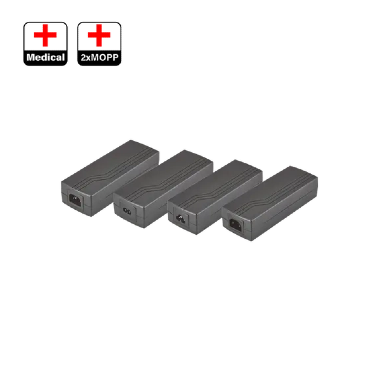
When it comes to medical equipment, safety is not just a priority—it is a necessity. From patient monitors to ventilators and diagnostic tools, every piece of equipment relies on a stable and safe source of power. Behind the smooth operation of these devices lies an essential component: the desktop medical AC-DC power supply.
While it may look like a simple external adapter, this power supply plays a critical role in ensuring both patient safety and equipment reliability. Unlike power supplies for ordinary consumer electronics, medical-grade supplies must meet strict safety standards that address the unique risks of healthcare environments. Understanding these standards is crucial for healthcare providers, biomedical engineers, and manufacturers alike when selecting a reliable desktop medical AC-DC power supply.
This article explores the key safety standards, explains why they matter, and highlights how compliance ensures both safety and performance.
In most consumer electronics, a malfunctioning power supply might mean a frozen screen, a reset device, or in rare cases, minor electric shock. But in medical equipment, the stakes are far higher. A small voltage fluctuation or electrical leakage could:
Interrupt life-support systems such as ventilators or infusion pumps.
Distort readings on diagnostic equipment, leading to inaccurate diagnoses.
Pose direct electrical risks to patients connected to monitoring electrodes.
These scenarios underline why medical power supplies cannot simply follow the same rules as consumer-grade adapters. They must be designed, tested, and certified according to strict international safety standards. Compliance ensures that patients remain safe, equipment functions accurately, and healthcare providers can trust their tools in critical situations.
The IEC 60601-1 standard is the cornerstone of medical equipment safety. It sets requirements for electrical, mechanical, and functional safety, and it applies globally. For desktop medical AC-DC power supplies, IEC 60601-1 ensures:
Low leakage currents: Patients often connect directly to medical devices through sensors or electrodes. Even tiny currents can be harmful. IEC 60601-1 restricts allowable leakage currents to extremely low levels to prevent shocks.
Reinforced insulation: Double or reinforced insulation separates the AC input (from the wall outlet) from the DC output (to the device), minimizing the risk of electric shock.
Creepage and clearance distances: These are the physical gaps within the power supply’s design that prevent unintended electrical paths. Strict distances must be maintained to avoid short circuits or arcing.
Protection in fault conditions: The power supply must remain safe even if a single fault occurs, such as a component failure.
Compliance with IEC 60601-1 assures healthcare professionals that the power supply provides the highest level of safety for both patients and operators.
Hospitals and clinics are full of electronic equipment operating side by side—monitors, imaging machines, ventilators, infusion pumps, and more. These devices emit and are vulnerable to electromagnetic interference (EMI).
IEC 60601-1-2 addresses this issue by ensuring:
Emission control: The power supply does not emit electromagnetic noise that could interfere with other sensitive equipment, such as ECG or MRI machines.
Immunity to interference: The power supply itself must withstand EMI from other devices without malfunctioning or shutting down.
Without EMC compliance, a power supply could disrupt nearby equipment or fail under interference, both of which could have dangerous consequences in a healthcare environment.
As healthcare shifts increasingly into the home, medical devices are no longer limited to hospitals and clinics. Devices like CPAP machines, portable oxygen concentrators, and home dialysis units rely on desktop medical AC-DC power supplies.
IEC 60601-1-11 covers safety requirements for equipment intended for home use. It ensures:
Durability in less controlled environments: Home environments have dust, humidity, and variable power conditions that differ from hospitals.
Protection for non-professional users: Home caregivers and patients may not have technical knowledge, so equipment must be safe and intuitive to use.
Compliance with residential EMC limits: Power supplies for home devices must meet stricter emission limits to avoid interfering with household electronics.
This standard is increasingly relevant as home healthcare becomes a critical part of modern medical care.
While IEC standards specify technical requirements, ISO 14971 focuses on risk management. For desktop medical AC-DC power supplies, manufacturers must systematically identify potential risks, assess their impact, and implement measures to reduce them.
This includes evaluating:
Risks of electric shock from leakage currents.
Fire hazards due to overheating.
Interruptions in power delivery that could compromise patient safety.
Risk management ensures that the power supply is not only technically compliant but also practically safe across its intended use cases.
While efficiency may seem secondary to safety, it directly impacts both patient care and environmental responsibility. Many regions require compliance with energy efficiency regulations such as:
U.S. Department of Energy (DOE) Level VI
European Union ErP Directive
Code of Conduct (CoC) Tier 2 in Europe
For desktop medical AC-DC power supplies, these standards mean:
Reduced heat generation: Less risk of overheating, which contributes to safer operation.
Lower energy costs: Beneficial for hospitals running hundreds of devices.
Sustainability: Supporting global efforts to reduce energy waste.
Efficient power supplies combine safety with responsibility toward patients, facilities, and the planet.
In addition to IEC and ISO standards, region-specific certifications further confirm reliability:
UL Certification (United States): Indicates that a product has been tested by Underwriters Laboratories for safety compliance.
CE Marking (Europe): Shows conformity with European health, safety, and environmental protection standards.
For healthcare providers, these marks simplify decision-making by confirming that a desktop power supply meets regional requirements.
With an understanding of the safety standards, here are practical steps for choosing the right power supply:
Verify Certification: Ensure the product explicitly states compliance with IEC 60601-1, IEC 60601-1-2, and other relevant standards.
Check Manufacturer Reputation: Work with manufacturers known for quality and reliability in medical power supplies.
Confirm Compatibility: Match voltage, current, and connector requirements with the medical device specifications.
Assess Environment: If used in home healthcare, confirm compliance with IEC 60601-1-11.
Plan for Longevity: Choose supplies with proven durability and availability of replacements to reduce downtime.
By following these steps, healthcare facilities can safeguard both patients and devices from unnecessary risks.
As medical technology advances, power supplies must evolve to meet new challenges:
Smaller form factors to fit compact and portable devices.
Smarter power management with monitoring features that provide feedback on performance and health.
Enhanced energy efficiency to align with sustainability goals.
Advanced safety features as equipment becomes more interconnected through the Internet of Medical Things (IoMT).
Despite these innovations, the foundation remains the same: compliance with international safety standards will always be the cornerstone of reliable medical power supplies.
Desktop medical AC-DC power supplies may appear simple, but they are among the most critical components in modern healthcare equipment. By converting AC power into safe, stable DC power, they protect patients, ensure accurate device performance, and meet the strict demands of clinical and home environments alike.
The key safety standards—IEC 60601-1, IEC 60601-1-2, IEC 60601-1-11, ISO 14971, and energy efficiency regulations—define what makes a power supply truly medical-grade. Compliance with these standards is not optional; it is essential for ensuring patient safety and building trust in medical technology.
For healthcare providers, engineers, and manufacturers, choosing a certified and reliable desktop medical AC-DC power supply is an investment in safety, reliability, and peace of mind. Companies like Xelite are committed to delivering power solutions that meet these standards, ensuring modern healthcare equipment operates with the highest level of safety and performance.


