- All
- Product Name
- Product Keyword
- Product Model
- Product Summary
- Product Description
- Multi Field Search
Email: sales@xelitepower.com
 English English
Author: Site Editor Publish Time: 01-26-2026 Origin: Site


Are you sourcing a DC-DC converter for your next project? Proper EMI filtering and safety compliance are essential for reliability. In this article, we will discuss the importance of these factors and how they impact your converter choice. You’ll learn what certifications to look for and how they protect your systems.
Electromagnetic interference (EMI) refers to disturbances generated by electrical circuits that can disrupt the normal operation of electronic devices. In the context of DC‑DC converters, EMI is particularly problematic as it can lead to inefficiencies, data corruption, and even system failure if not properly managed.
There are two main types of EMI:
● Conducted EMI: This occurs when electromagnetic waves travel through conductors such as power lines, signal cables, and PCB traces, impacting adjacent systems.
● Radiated EMI: This type of interference spreads through the air, creating electromagnetic fields that can influence nearby devices, often resulting in poor performance or malfunction.
EMI can significantly degrade the performance of DC‑DC converters, which are sensitive to such interference. The primary concerns are:
● Signal Integrity: Unfiltered EMI can corrupt the signals processed by the converter, leading to incorrect voltage output and system instability.
● System Performance: Continuous exposure to EMI can cause the system to experience slowdowns or even complete failure, affecting reliability.
● Equipment Failure: Prolonged interference may damage sensitive components, such as capacitors or inductors, leading to costly repairs or system downtimes.
Real-world implications of insufficient EMI filtering include:
● Data transmission errors in communication systems.
● Inconsistent voltage regulation in industrial applications.
● Risk of system shutdowns in automotive electronics.
EMI filters are crucial components that help suppress EMI by allowing only the desired frequencies to pass through while blocking unwanted high-frequency noise. Different types of EMI filters are used in DC‑DC converters:
● Low-pass filters: These filters allow low-frequency signals to pass while blocking higher-frequency EMI, making them ideal for most DC‑DC converters.
● High-pass filters: Used in certain applications where it’s necessary to block lower-frequency noise.
Effective EMI filtering helps ensure that DC‑DC converters deliver a stable and reliable output with minimal interference, thereby improving the overall performance of the system.
In industrial environments, EMI can disrupt the operation of complex control systems and automation equipment. For example, programmable logic controllers (PLCs) and sensors may experience signal degradation or malfunction when exposed to high levels of EMI. EMI filtering helps to protect sensitive devices by:
● Reducing noise that could cause control signal errors.
● Preventing interference from affecting the accuracy of sensor readings.
● Ensuring that systems like CNC machines or robotic arms operate smoothly without disruptions caused by electromagnetic noise.
For these reasons, EMI filtering is essential in maintaining the reliability and accuracy of industrial automation systems.
Automotive systems face unique challenges when it comes to EMI. DC‑DC converters in vehicles are often required to handle high levels of interference from multiple sources, such as:
● GPS units and dash cameras.
● Electrical motors and battery chargers.
● Infotainment systems and sensor arrays.
EMI filtering ensures the proper operation of these systems by:
● Preventing malfunctions in vehicle electronics, such as inconsistent GPS data or faulty sensor inputs.
● Safeguarding sensitive automotive equipment from high-frequency noise generated by other electrical systems in the vehicle.
For example, a DC‑DC converter with proper EMI filtering can ensure stable voltage output for the vehicle’s entertainment system and navigation units, improving the overall driving experience.
Safety certifications are crucial in ensuring that DC‑DC converters not only function properly but also adhere to the required standards for safety and reliability. These certifications help maintain product integrity while also protecting both the manufacturer and end-users. Compliance with recognized standards, such as CE, UL, and LVD, ensures that the products meet stringent safety requirements that are essential for their safe operation and legality in various global markets.
Risks of Non-Compliance:
● Safety Hazards: Without proper certification, DC‑DC converters may pose significant safety risks, such as electrical shocks, fires, or equipment malfunctions.
● Product Recalls: Failure to meet safety standards can lead to costly product recalls, damaging the manufacturer’s reputation and financial standing.
● Legal Consequences: Non-compliance can also lead to legal issues, including fines, lawsuits, or restricted market access.
Certification | Description |
CE (Conformité Européenne) | Ensures the product meets European Union safety standards for electronics. |
UL (Underwriters Laboratories) | A globally recognized certification indicating that the product has passed rigorous safety tests for electrical systems. |
LVD (Low Voltage Directive) | Specifies safety requirements for electrical equipment operating within certain voltage limits in the European Union. |
Several certifications help guarantee that DC‑DC converters are both safe and reliable for industrial and commercial applications:
1. CE Certification:
Required for products sold within the European Union.
Ensures the product meets European safety standards, such as low voltage, electromagnetic compatibility (EMC), and environmental protection.
2. LVD (Low Voltage Directive):
Covers electrical products that operate between 50V to 1000V AC or 75V to 1500V DC.
Ensures safety by defining requirements for insulation, grounding, and protection from electric shock.
3. UL Certification:
A North American standard required for electrical devices, ensuring they are safe and reliable for long-term use.
Contributes to global product acceptance and customer confidence.
Xelite's DC‑DC Converters are equipped with these certifications, ensuring compliance with international standards and guaranteeing that they meet safety, performance, and quality expectations.
For a DC‑DC converter to be effective, it must exhibit high efficiency and voltage stability to ensure minimal energy waste and reliable output. High-efficiency converters reduce the energy consumption of the entire system while providing a consistent and stable voltage.
Importance of High Efficiency
● Energy savings: Efficiency of 90-95% minimizes energy loss, which is critical for both cost-effective operation and environmental impact.
● Reduced heat generation: High efficiency lowers the need for cooling systems, ensuring that the converter operates in a more stable environment.
Feature | Details |
Conversion Efficiency | Up to 90–95%, improving overall system performance. |
Ripple & Noise | Low ripple and noise, ensuring high-quality power for sensitive electronics. |
Voltage Stability | Stable regulated output across varying load conditions. |
Modern DC‑DC converters come equipped with a variety of protection features to safeguard both the device and the system. These protections ensure the longevity and reliability of the converter by preventing damage from various electrical conditions.
Common Protection Features:
● Over-voltage protection: Automatically shuts down the system if the voltage exceeds safe limits.
● Over-current protection: Prevents damage caused by excessive current flow.
● Short-circuit protection: Ensures the converter is safe during electrical faults by preventing short circuits.
● Over-temperature protection: Shuts down the system if it overheats, preventing damage to internal components.
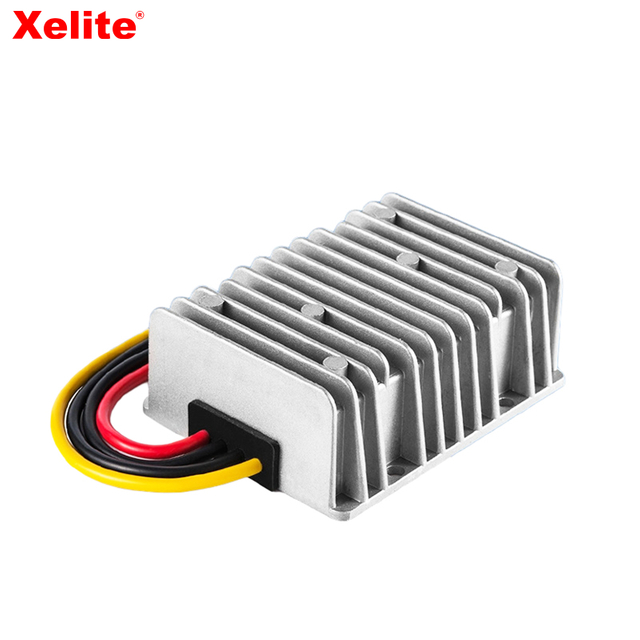
Xelite DC‑DC converters are designed to be highly customizable, offering a wide range of options to suit specific system requirements. Customization options ensure the converters can be tailored for various applications, from industrial systems to automotive electronics.
Customization Includes:
● Input/output voltages: Tailored to meet specific power conversion needs (e.g., 5V to 72V).
● Power ratings: Adjustable power ranges to accommodate different energy demands (e.g., 1W to 6000W).
● Connector types: Custom connectors to ensure compatibility with system configurations.
Xelite offers robust, customizable solutions for various industries, ensuring high-quality power conversion in environments like automated systems, LED lighting, and vehicle electronics.
Ensuring that your DC‑DC converter complies with EMI and safety standards is a critical part of the sourcing process. Compliance is not only necessary for legal reasons but also ensures the reliability, safety, and efficiency of the converter in real-world applications.
Each region has its own set of standards and regulations governing electromagnetic compatibility (EMC) and safety certification. The most commonly referenced standards are:
● FCC (Federal Communications Commission) in the United States: Defines the limits of EMI for electronic devices.
● EMC Directive in the European Union: Governs the electromagnetic compatibility of electrical equipment to ensure safe operation within electromagnetic environments.
It’s essential to understand the standards that apply to your DC‑DC converter based on the region where it will be used.
Region | Certification Standard | Key Focus |
United States (US) | FCC | Limits electromagnetic emissions and ensures device immunity. |
European Union (EU) | EMC Directive | Ensures the compatibility of electrical equipment with electromagnetic environments. |
Global | UL (Underwriters Laboratories) | Safety certification to guarantee electrical products meet safety standards. |
Once you understand the relevant regulations, the next step is verifying that the DC‑DC converter meets the required standards. Always request:
● Certification documents: Check for recognized safety certifications, such as CE for the European market and UL for North American markets.
● Test reports: Confirm the product has passed EMI testing and safety tests for components and overall operation.
Certification | Region | Description |
CE | European Union (EU) | Confirms compliance with European safety standards. |
UL | North America | Ensures the product meets safety standards. |
LVD | EU and Global | Applies to devices operating within specific voltage limits. |
FCC | United States | Regulates electromagnetic emissions and ensures immunity. |
When sourcing a DC‑DC converter, the key factors to consider are power requirements, EMI filtering, and safety certifications. These aspects are crucial in ensuring that the converter meets both functional and regulatory needs for your specific application.
● Input and Output Voltage: Ensure the converter can handle the required input voltage range (e.g., 8V to 90V) and provide the stable output voltage (e.g., 5V to 24V) needed for your application.
● Current Handling: Verify that the converter supports the necessary current output (e.g., 1A to 30A) for your devices without exceeding rated limits.
● Ensure the converter includes appropriate EMI filtering capabilities to prevent conducted and radiated EMI from disrupting other electronic systems. Look for low-pass filters that block high-frequency noise or converters with built-in EMI protection.
● Confirm the DC‑DC converter has the required safety certifications like CE, UL, and LVD. These certifications confirm that the product has been tested for safety and compliance with industry regulations.
Consideration | Details |
Power Requirements | Ensure compatibility with input/output voltage and current needs. |
EMI Filtering | Choose converters with EMI filters to ensure system stability and signal integrity. |
Safety Certifications | Confirm compliance with CE, UL, LVD, and other industry-specific standards. |
When you source from Xelite, a manufacturer with years of expertise in power supply technologies, you ensure that your DC‑DC converter will meet all the necessary EMI and safety standards.
When sourcing a DC‑DC converter, ensuring EMI filtering and safety certification compliance is crucial for achieving stable performance and meeting regulatory requirements. These factors help protect your systems from interference and ensure the safety and reliability of your equipment.
For the best results, prioritize high-quality products from manufacturers like Xelite, which provide reliable, efficient, and fully compliant DC‑DC converters tailored to meet your specific needs.
A: A DC-DC converter is an electronic device used to convert a source of direct current (DC) from one voltage level to another, ensuring stable power output for various systems.
A: EMI filtering reduces electromagnetic interference, ensuring the DC-DC converter delivers stable output without affecting nearby electronic systems.
A: Safety certifications like CE, UL, and LVD ensure that DC-DC converters meet international safety standards, protecting users and ensuring legal compliance.
A: Check for certification documents and product test reports that confirm compliance with relevant safety and EMI standards.
A: Consider the input/output voltage, power requirements, EMI filtering needs, and safety certification to ensure the converter suits your system requirements.